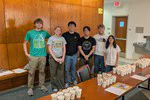
spinlab at William & Mary is a student-driven, NMR-focused research group investigating physical properties of materials.
Our Research
Our research addresses problems in physical chemistry and materials science using both experimental and computational methods, centered on single-sided nuclear magnetic resonance (NMR) relaxometry — trading the atom-specific signal of a million-dollar spectrometer for something far cheaper and more flexible. What we do: instrumentation and methods that make better measurements possible, computational work that makes sense of what we measure, and applications that put both to use on real materials.
Improving single-sided NMR instrumentation and use
We develop pulse sequences, nuclear hyperpolarization, and accessory hardware that improve the ease of use, accuracy, and quality of single-sided NMR measurements.

Connecting molecular behavior and macroscopic measurements
We use computational methods to predict and interpret relaxometry and other measurements done using single-sided magnets. We also actively pursue better methods to analyze relaxometry data in context of particular applications.
Using NMR to study adhesives, artwork, and more
We use NMR, along with other methods, to study a wide range of materials and applications. Some of these include coatings, epoxies, and polymers; chemical kinetics; art, archaeology, and objects of cultural heritage; and biomaterials.

Open, student-driven, peer-mentored research
Progress in the lab depends on strong mentoring and collaboration — students guide each other and bring their own research ideas to the table, turning them into real projects. Along the way, they pick up skills from electronics to computation.

Recent Publications
Group
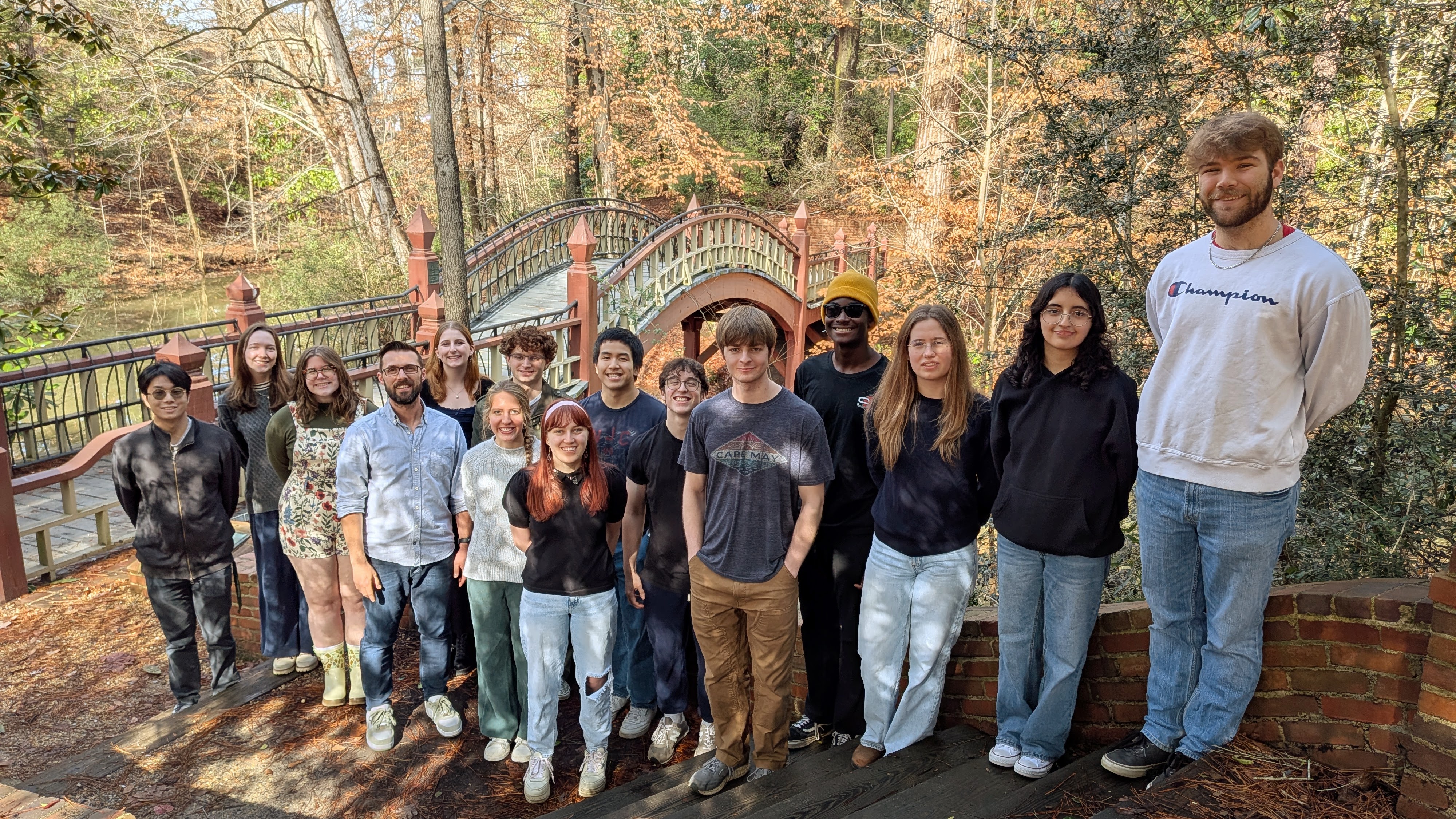
Spring 2026
Principal Investigator

Tyler Meldrum
Associate Professor of Chemistry, Director of Undergradate Research in Chemistry
Graduate Student
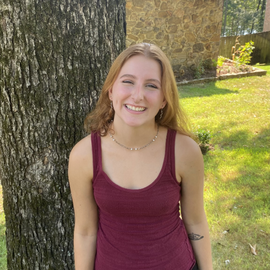
Kylie McCoy
Biochemistry, 2026; M.S. 2028
Undergraduate Students

Alexandra Castillo
Math major, Chemistry minor, 2027
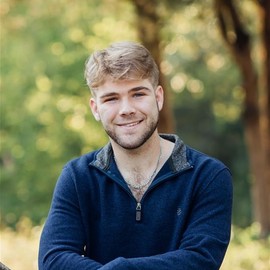
Thomas Felton
Data Science major, Chemistry minor, 2027
Amelia Haid
Chemistry, 2029

David Han
2028
Sam Heanue
Chemistry (Chemical Physics concentration), 2029
Eliza Hedlund
Chemistry, 2027
Henry Hladky
Chemistry and Biology, 2027
Huy Le
Chemistry, 2027
Aya Musselmani
2029
Morgan Peden
Economics, 2027
Megan Pruitt
Chemistry and Religious Studies, 2027
Elijah Suk
2028
Elena Torres
Chemistry and Art/Art History, 2026